 There may be more than
250,000
autistic college students enrolled this year.
The Prevalence of Autistic College Students in the United States
Autism in Adulthood (2026)

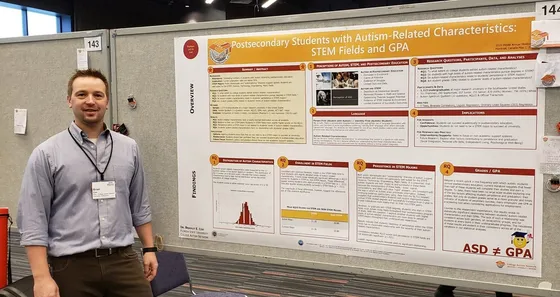
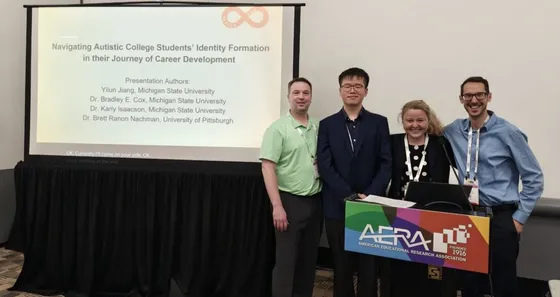
My research uses quantitative and qualitative methods to examine factors that shape college experiences and outcomes for student populations often overlooked within higher education, including racially minoritized students, transfer students, adults, students facing difficult life events, and first-generation college students. Collectively, these research projects have earned more than $1.1 million in grant funding and generated dozens of articles in highly-respected journals.
My most recent scholarship focuses on the ways personal characteristics and institutional environments affect autistic college students, including the PEACES Project, which highlights autistic collegians’ own definitions of success. In 2016, I founded the nonprofit College Autism Network to connect research, policy, and practice.
 There may be more than
Autism in Adulthood (2026)
 Things that help.
The Review of Higher Education (2026)
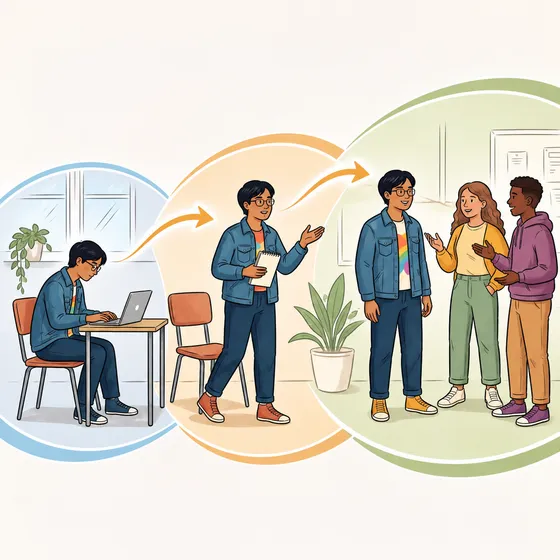 Developing Agency
Journal of College Student Development (2025)
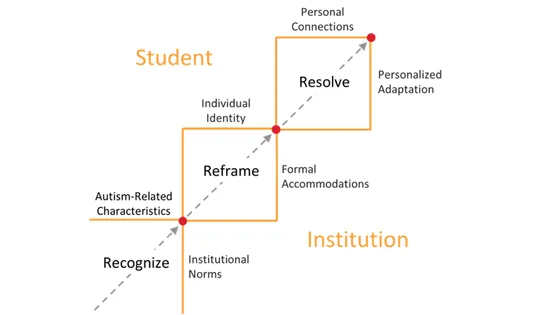 The '3R' Model
The Journal of Higher Education (2021)
Understanding college success through autistic students' own experiences and priorities.
Postsecondary Education: Autistic Collegians' Experiences of Success (PEACES) is a national, longitudinal study of how autistic students define and experience success in college. Through surveys, interviews, and photo-based storytelling, the project examines the personal, social, psychological, academic, and professional dimensions of students' lives. It centers perspectives often overlooked in higher education research, including those of women, racially minoritized students, LGBTQ+ students, and community college students. The findings inform campus practice and create a foundation for further research on autistic students' well-being and college experiences.
Connecting the systems that support autistic students across education and adult life.
FAST develops a research agenda for improving transitions across the systems that shape autistic students' educational journeys. It focuses on connections among K-12 transition planning, higher education, employment, healthcare, and disability services such as vocational rehabilitation. Supported by a Spencer Foundation Vision Grant, the project identifies opportunities for coordinated research and systems change. Its goal is to guide future work that makes support more connected across educational and adult-life transitions.
Examining how instructors communicate the rules for AI in college coursework.
AI Policies in College Syllabi investigates how instructors communicate expectations for generative AI in their courses. Starting with publicly available UT Austin syllabi from fall 2022 onward, the study is designed to compare policies across disciplines, course levels, and time. Its planned approach combines systematic document collection with AI-assisted analysis of permitted uses and the clarity and specificity of course rules. The goal is to inform clearer policies and more inclusive teaching, with particular attention to neurodivergent students and students who use English as an additional language.
Developing user-friendly resources to help researchers and students maintain scholarly rigor, integrity, and consistency when using generative artificial intelligence (AI).
AI Tools brings together practical resources for using artificial intelligence in research, teaching, and academic work. The collection includes an AI-System Rulebook, guidance for using it, and a classroom AI-use policy that educators can adapt. These resources emphasize clear expectations, responsible authorship, source verification, and transparent disclosure of AI use. The aim is to make AI-assisted work more consistent, auditable, and useful while keeping scholarly judgment with the researcher or educator.
Connecting academic affairs, student affairs, and faculty instruction to student experiences in the first year of college.
Parsing the First Year of College was a national research project examining how institutional policies and faculty practices shape first-year student success. Through surveys of chief academic officers and faculty alongside institutional policy analysis, the project documented how colleges structure the first-year experience and how faculty behaviors influence student interaction and engagement. Its findings informed research on teaching culture, faculty approachability, differences in first-year courses, and methods for handling missing data in higher education studies.
Exploring connections between institution-level policies and student engagement at 57 institutions across five states.
The LIPSS project sought to identify specific institution-wide policies that can be leveraged to increase college student engagement – a key predictor of student grades and persistence that is especially beneficial to underrepresented and academically under-prepared students. Data were collected from 57 institutions in Texas, Florida, Pennsylvania, California, and Iowa. Its findings informed work on first-generation student benchmarks, student affairs practices for adult undergraduates, and data-driven decision making in higher education.
44 results
No works match these filters. Deselect a filter to broaden the results.

2026 · “Finding Other People Whose Minds Work Similarly to Mine:” Supporting Autistic College Student Success · The Review of Higher Education

2026 · “I Always Ended Up Getting Close to Other People Who are Autistic”: Autistic College Students’ Friendship Development · The Journal of Higher Education

2026 · “Enjoy your time and be confident”: Honoring autistic community college students’ multifaceted interpretations of success · Journal of Diversity in Higher Education

2026 · The Prevalence of Autistic College Students in the United States · Autism in Adulthood

2026 · “It's Absolutely About Just Surviving”: How Autistic College Students Define Success · Journal of Postsecondary Student Success

2025 · "An Important Part of Who I Am": How Autistic College Students Demonstrate Advocacy · Journal of College Student Development
2025 · An Expert Discussion on Autism in Postsecondary Education and the “Empowering Engines” Who Do Good · Autism in Adulthood

2025 · Faculty Members’ Roles in Elevating Autistic College Student Success (Practice Brief) · Journal of Postsecondary Education and Disability

2022 · Brief Report: Autism-Specific College Support Programs: Differences Across Geography and Institutional Type · Journal of Autism and Developmental Disorders
2021 · Navigating Challenges to Facilitate Success for College Students with Autism · The Journal of Higher Education
2020 · Five Principles to Improve Quantitative Research and Assessment About College Students with Disabilities (Practice Brief) [Alternate Download] · Journal of Postsecondary Education and Disability

2020 · Bridging the Cultural Gap: Relationships Between Programmatic Offerings and First-Generation Student Benchmarks · Journal of College Student Retention: Research, Theory & Practice
2020 · An Exploration of Actionable Insights Regarding College Students with Autism: A Review of the Literature · The Review of Higher Education

2020 · From Democratic to “Need to Know”: Linking Distributed Leadership to Data Cultures in the Florida College System [Alternate Download] · AERA Open

2019 · Helping Parents with the Initial Diagnosis of Autism: Parent-Informed Guidance for Clinicians · Evidence-Based Practice in Child and Adolescent Mental Health

2019 · Support Systems for College Students with Autism Spectrum Disorder [Alternate Download] · College Student Affairs Journal
2018 · Parental Disclosure of ASD Diagnosis to the Child: A Systematic Review · Evidence-Based Practice in Child and Adolescent Mental Health

2018 · Making disability visible in higher education research: A DRAFT research agenda for quantitative, qualitative, and theoretical higher education disability scholarship · Report submitted to the Spencer Foundation
2018 · Making disability visible in higher education research: Documenting qualitative, quantitative and theoretical issues and solutions · Report submitted to the Spencer Foundation

2018 · Changing the Default to Support Open Access to Education Research · Educational Researcher
2017 · College Experiences for Students With Autism Spectrum Disorder: Personal Identity, Public Disclosure, and Institutional Support · Journal of College Student Development
2017 · Lip Service or Actionable Insights? Linking Student Experiences to Institutional Assessment and Data-Driven Decision Making in Higher Education · The Journal of Higher Education

2017 · College Students in Crisis: Prevention, Identification, and Response Options for Campus Housing Professionals · Journal of College and University Student Housing

2016 · Supporting Atheist Students: Report from the 2015 College Student Population doctoral seminar · Florida State University

2016 · No adult left behind: Student affairs practices targeting adult undergraduates · ACPA Developments

2016 · Self-Authorship in Student Affairs: A Developmental Paradox · Journal of Student Affairs Research and Practice

2016 · Life Happens (Outside of College): Non-College Life-Events and Students’ Likelihood of Graduation · Research in Higher Education
2015 · Hidden Trauma, Quiet Drama: The Prominence and Consequence of Complicated Grief Among College Students · Journal of College Student Development
2014 · Opposing forces: An organizational view of transfer policies and practices · College Student Affairs Journal
2014 · Working with Missing Data in Higher Education Research: A Primer and Real-World Example · The Review of Higher Education
2012 · Rationalizing Neglect: An Institutional Response to Transfer Students · The Journal of Higher Education

2012 · Linking institutional policies to student success: Initial results from a five-state pilot study · Florida State University's Center for Higher Education Research, Teaching, and Innovation

2011 · A developmental typology of faculty-student interaction outside the classroom · New Directions for Institutional Research: Using Typological Approaches to Understand College Student Experiences and Outcomes
2011 · A Culture of Teaching: Policy, Perception, and Practice in Higher Education · Research in Higher Education
2010 · Faculty and Institutional Factors that Promote Student Encounters with Difference in First-Year Courses · The Review of Higher Education
2010 · Pedagogical Signals of Faculty Approachability: Factors Shaping Faculty–Student Interaction Outside the Classroom · Research in Higher Education
2009 · Chief Academic Officers Survey: Users’ Guide · Parsing the First Year of College Project
2009 · Survey of Faculty Activities and Perceptions: Institutional Report and User's Guide

2007 · Shedding Light on Sophomores: An Exploration of the Second College Year

2007 · Importance of Faculty Involvement in Orientation [Alternate Download] · The Journal of College Orientation and Transition
2007 · Faculty-Student Interaction Outside the Classroom: A Typology from a Residential College · The Review of Higher Education

2006 · A Proven Possibility: Faculty-Student Interaction Outside the Classroom · E-Source for College Transitions

2005 · Overview of Survey Responses · The 2003 National Survey on First-Year Seminars: Continuing Innovations in the Collegiate Curriculum

2005 · Exploring the Evidence: Reporting Research on First-Year Seminars, Volume III